
Our training
Second Circle
Training
Making effective what is already there.
In many organisations, far more is already in motion than ever reaches the top. The Second Circle makes that energy visible and turns it into concrete steps. In our training, we show you how to build a Second Circle from the ground up.
Use what
is already there.
The Second Circle is not a distribution list, not a participation format and not a list of multipliers. It makes visible where energy, knowledge and initiative already exist in teams, departments and networks – and how these become concrete steps.
The training brings together theory, perception and hands-on tools. By the end, you leave with concrete drafts for your own day-to-day work.


The framework
at a glance
- Format
- One in-person phase (Thu–Sun) at the Felixhof, then two guided integration sessions
- Duration
- approx. 8–10 weeks
- Location
- Felixhof near Oberaudorf; integration online
- Fee
- €3,290 plus VAT
- Accommodation & full board
- €170 per night (additional)
- Group size
- max. approx. 10 participants
Online serves only transfer and integration, not the core – because field perception, resonance, body and place are central.
Four interwoven learning fields
-

Concept
Emergence, complexity and Cynefin, the interplay of core team, Second and Third Circle and the whole organisation, the Adjacent Possible, superposition, requisite variety and polyrhythmic transformation architecture.
-
Body and field
Holding tension, not resolving ambiguity too quickly, perceiving aliveness, rigidity and overheating, distinguishing resonance from adaptation, and reading control, pull, resistance and trust in the body.
-

Tools
The Second Circle canvas, Warm Data, attractors of people and topics, experiments and good practices, communication architecture, rhythm and ritual design, and feedback into the formal organisation.
-

Practice and score
Clarifying your own transformation tension, gathering field observations, testing small gardener interventions, developing a 90-day score, and sketching a first yearly logic and rhythm architecture.

The guiding image: the growing plant.
Good gardeners don't pull on plants to make them grow faster. They work on the conditions: soil, light, water, spacing, protection.
The Second Circle works in a similar way. It replaces neither strategy nor leadership. It makes visible and usable what already exists in the organisation: ideas, relationships, experience, dissent, courage.
The Felixhof
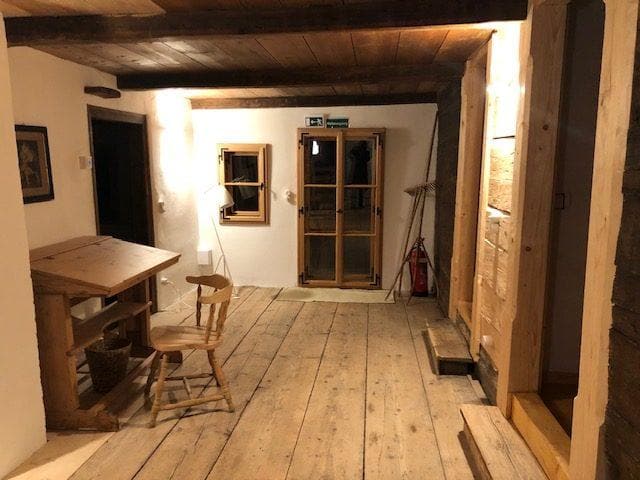
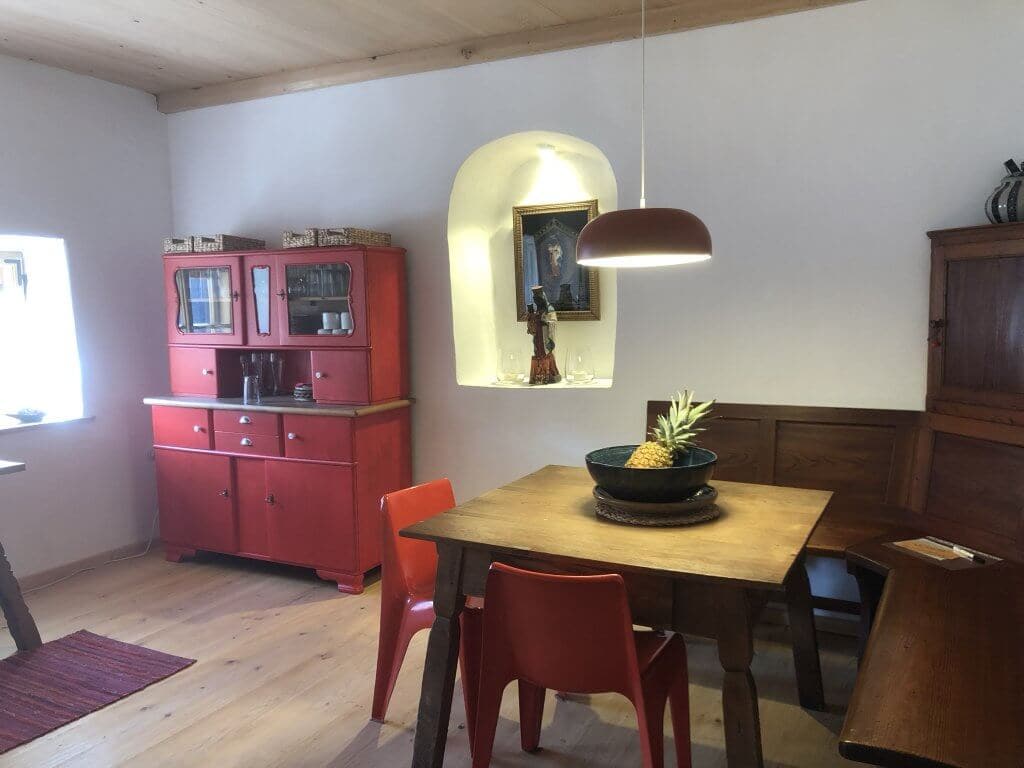
Work happens in a house that itself tells of rhythm, material and care: the in-person phase takes place at the Felixhof, a mountain farmhouse from 1458 near Oberaudorf – around 50 minutes from Munich, nestled between forest, meadow and mountain.
The place suits a training that is about tracing what is already in motion.
Choreography of the farm phase
The in-person phase at the Felixhof runs from Thursday to Sunday and follows a clear arc.
- 01 Entering the ecology of the possible
- 02 Reading body, field and resonance
- 03 Shaping the Second Circle
- 04 Preparing implementation and integration
Between farm and integration: your own practice.
Between the in-person phases you return to your own everyday life: with a concrete question, open eyes and conversations in your surroundings. What shows up there? Where does it get stuck? Where is something moving? From this a small practice test emerges, whose insights flow back into the group.
Who is the training for?
The training is for people who guide change in organisations, networks, municipalities or institutions and need more than project logic, communication campaigns or classic participation formats.
- Transformation leads
- Organisational developers
- Community and network designers
- Leaders with a change mandate
- Process facilitators
Results
- recognise faster what change actually hinges on
- waste less energy on pseudo-solutions and treating symptoms
- lead conversations so that relevant information surfaces
- better gauge the room for manoeuvre within your own system
- use small tests before big measures are decided
- make decisions that fit the context better
Initial conversation
For organisations with a concrete change project: a short conversation about context, needs and the right way in.
